
LAB GROWN DIAMOND
Comparison
MINDED
DIAMOND
Composition
CarbonDurability: 10
Refractive index : 2.417~2.419
Dispersion: 0.044
Price
$4000-$9000/1 ct
Cert
GIA Certification
Formation Process
Natural exposure of carbon deposits to high temperatures and pressure in the earth's crust
LAB-GROWN DIAMOND
Composition
CarbonDurability: 10
Refractive index : 2.417~2.419
Dispersion: 0.044
Price
$300-$500/1 ct
Cert
GIA Certification
IGI Certification
Formation Process
Crystallization of a natural or lab-grown seed diamond through chemical vapor
deposition or a high-pressure, high-temperature process
CUBIC
ZIRCONIA
Composition
CarbonDurability: 10
Refractive index : 2.417~2.419
Dispersion: 0.044
Price
$100/1 ct
Cert
GIA Certification
Formation Process
Adding materials such as metal shards and stabilizers to zirconia, then heating the mixture with electric current until it crystallizes
MINDED
DIAMOND

LAB-GROWN DIAMOND
MOISSANITE
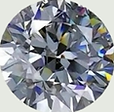
Nakaed eye Difference?
NATURAL AND LAB-GROWN
Natural diamonds and lab-grown ones are made of the same composition, but the growth rate and environment differ. Therefore, in the absence of professional instructions, professional appraisers cannot distinguish with the naked eye
MOISSANITE
The dispersion rate of moissanite is strong but unnatural, and the crystals are not translucent enough.
MINDED
DIAMOND
Highest
Since natural diamonds take a long time to form and are rare, they are expensive. The higher the diamond's grade, the higher its price and value will follow.
Price Difference
LAB-GROWN DIAMOND
Moderate
Around 75% less expensive than natural diamond due to the fast, replicable formation process
MOISSANITE
Lowest
Naturally occurring crystals made from silicon carbide are used as an inexpensive alternative to diamonds. It is more affordable
MINDED
DIAMOND
Natural exposure of carbon deposits to high temperatures and pressure in the earth's crust
Composition Difference
LAB-GROWN DIAMOND
Cultured diamonds have the same chemical composition as natural diamonds, but they are formed through laboratory simulation of the natural conditions and environment in which diamonds are created
MOISSANITE
an artificial diamond simulant, made using silicon carbide, which is a common material used for industrial purposes
Fire comparison
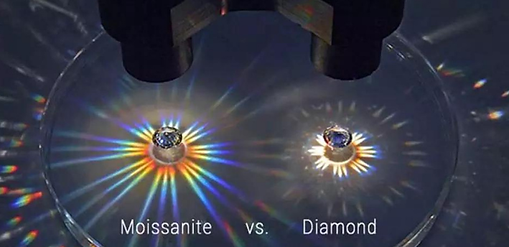
Moissanite>Natural=Lab-Grown
Natural diamonds and cultured diamonds are visually indistinguishable to the naked eye, and can only be differentiated under a microscope
Moissanite has double refraction, and its brilliance is stronger than that of a natural diamond, at about 2.5 times the brilliance of a natural diamond